This post includes affiliate links. If you choose to purchase through them, I may receive a small commission at no extra cost to you.
Why I Chose Costa Rica for a Two Week Surf Trip
Planning a Costa Rica 2 week surf itinerary felt surprisingly simple compared to other surf destinations I was considering.
Before this trip, I was somewhere between early intermediate to intermediate.
I could paddle out comfortably and catch waves consistently, but I still struggled with reading peaks, choosing the right take-off spot, and making quick decisions when conditions changed.
I wanted a destination where I could surf every day without feeling intimidated. Indonesia was tempting, but many of the waves I researched looked more advanced than I wanted.
Costa Rica seemed different.
The country offered warm water, consistent swell, beach breaks suited to progression, and a well-established backpacker route that made it possible to travel without renting a car.
The goal wasn’t to chase perfect waves. I simply wanted two weeks of regular surf, steady improvement, and enough variety to keep things interesting.
In This Guide
My Exact Two Week Costa Rica Surf Route
After flying into Liberia, I built a simple route down the Pacific coast. The plan was designed around surf progression rather than seeing as many places as possible.
- Tamarindo, 4 days
- Nosara, 3 days
- Santa Teresa, 4 days
- Dominical, 3 days
This two week Costa Rica surf route worked because each stop offered a slightly different experience.
Tamarindo was an easy starting point. Nosara helped me improve my technique. Santa Teresa introduced more power and faster waves. Dominical provided the biggest challenge of the trip.
All of these destinations were connected using public buses. The travel days could be long, but the system was affordable and surprisingly straightforward once I got used to it.
If I followed this exact two week Costa Rica surf route again, I would probably remove one destination and spend longer in Nosara and Santa Teresa.
How I Traveled Costa Rica Without a Car
I completed this entire Costa Rica 2 week surf itinerary using public buses. It required a little more planning, but it saved a significant amount of money.
Some journeys involved changing buses in larger towns, and a few travel days took most of the day, but I never felt stranded.
The buses were used by both locals and travelers. They were basic but reliable.
Carrying a surfboard was sometimes difficult but locals understood and helped place the board bags in safe and ding free spots.
For anyone researching a Costa Rica surf trip planning guide, don’t assume a rental car is essential.
If your goal is surfing rather than road-tripping, buses can get you almost everywhere you need to go. And for cheap!
Days 1 to 4: Tamarindo and Settling Into Surf Life
Tamarindo was the perfect place to start.
After arriving in Liberia, the bus ride was straightforward, and within a few hours I was checking into a hostel near the beach. Having accommodation within walking distance of the surf made everything easier.
The waves were fun and forgiving. Crowds were definitely present, especially during good conditions, but Tamarindo gave me the chance to shake off travel fatigue and get comfortable in the water again.
For surfers searching for a Costa Rica beginner surf travel itinerary, Tamarindo remains one of the easiest places to begin. Surf schools, rentals, restaurants, supermarkets, and accommodation are all close together.
I enjoyed my time there, although it was probably my least favourite surf stop because of the crowds. Still, it played an important role in building confidence before moving to more challenging locations.
Days 5 to 7: Why Playa Guiones Became My Favourite Surf Spot
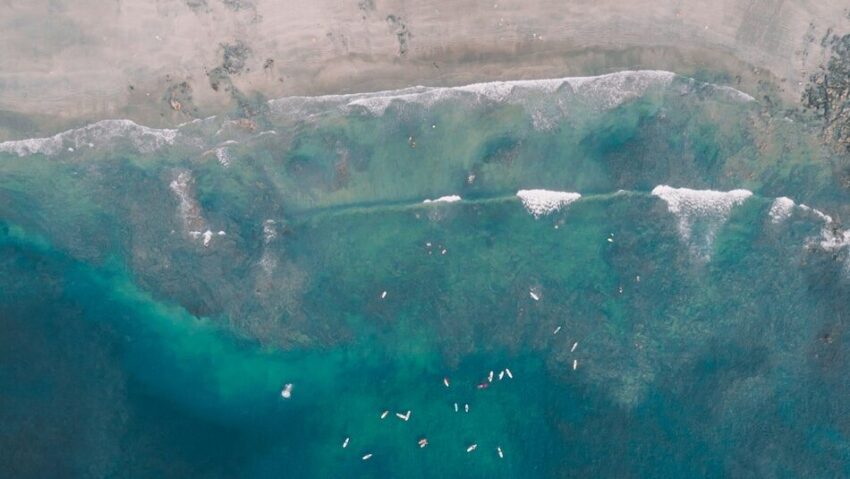
Nosara was where everything clicked.
The bus journey took longer than expected, but arriving in Nosara immediately felt worth it. The town had a calmer atmosphere, and Playa Guiones quickly became my favorite surf spot in Costa Rica.
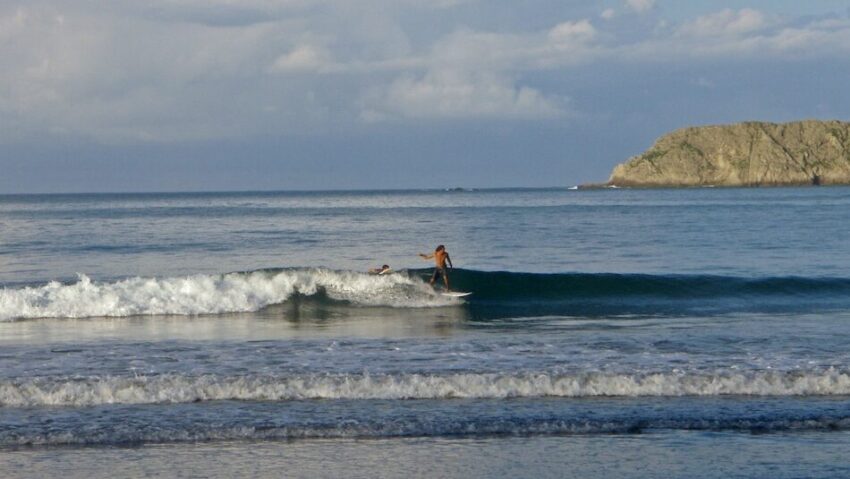
The waves seemed endless. Long walls rolled in consistently, allowing me to focus on technique instead of survival. I could practice positioning, improve my timing, and build confidence without feeling pressured.
This stretch of the Costa Rica 2 week surf itinerary was where I noticed the biggest improvement in my surfing. Every session felt productive.
If someone asked me to recommend the best Costa Rica surf trip itinerary for progression, I would immediately tell them to spend extra time in Nosara.
Days 8 to 11: Santa Teresa's More Powerful Waves
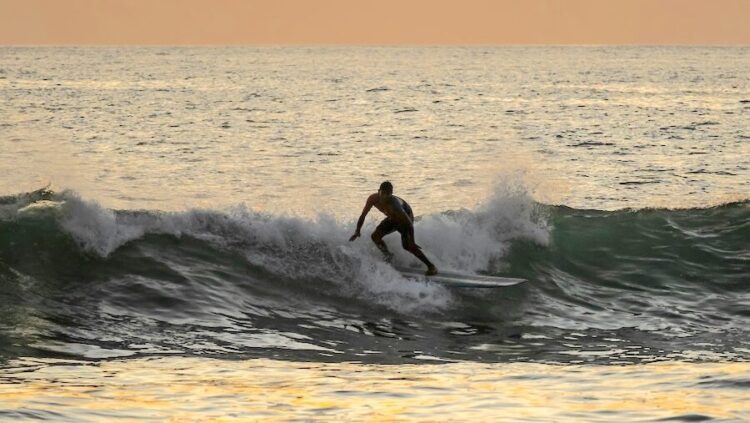
Santa Teresa felt like the next step.
The town had more energy, more surf culture, and noticeably more powerful waves. When swell arrived, the surf became faster and more demanding than what I experienced in Nosara.
That challenge was exactly what I needed. By this point in the trip, I felt stronger, more confident, and more comfortable reading conditions.
The surf wasn’t necessarily easier, but it was rewarding. Good sessions in Santa Teresa felt earned. This section of my Costa Rica 2 week surf itinerary showed me how valuable gradual progression can be.
Starting in Tamarindo and Nosara prepared me for conditions that would have felt overwhelming at the beginning of the trip.
Discover The Best Surf Camps
In Costa Rica
Days 12 to 14: Dominical and a Lesson in Ocean Respect
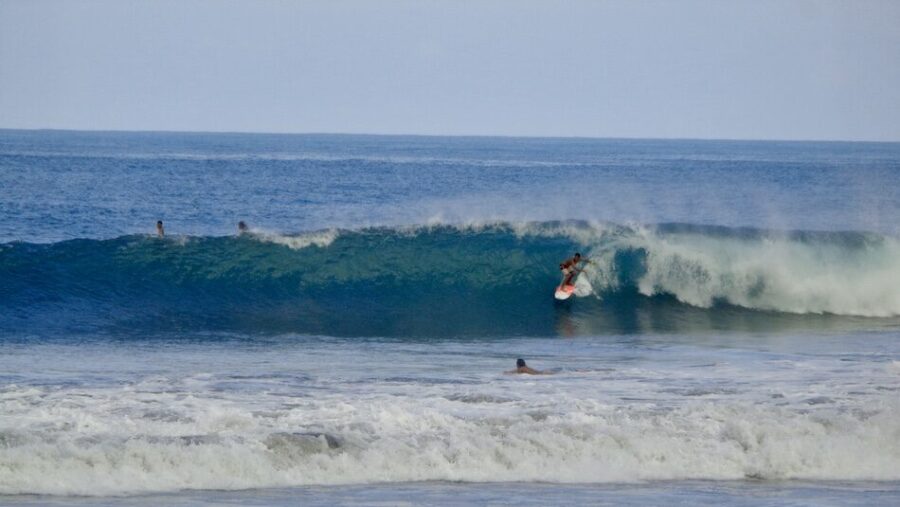
Dominical was easily the most challenging destination on the route.
The waves carried more power, and the currents demanded attention. During a couple of sessions, I found myself spending more energy navigating currents than actually surfing.
That wasn’t necessarily a bad thing.
One of the biggest lessons from this Costa Rica 2 week surf itinerary was learning when not to paddle out. There were moments when sitting on the beach and observing conditions was the smarter choice.
Dominical pushed me beyond my comfort zone, which made it a memorable way to finish the trip.
What a Typical Day Looked Like
Most days followed a routine that quickly became one of my favourite parts of the experience.
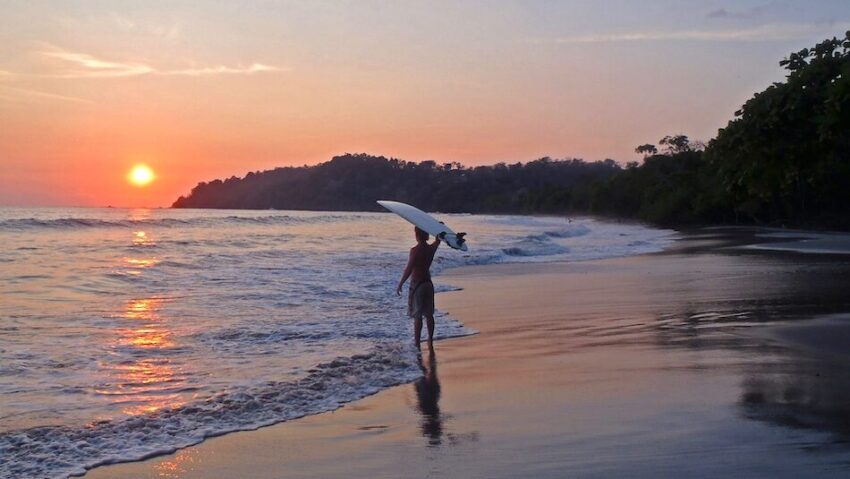
I would wake up before sunrise, make a quick coffee, and walk to the beach for a surf check with a mug in hand. The morning session was usually the highlight because the wind was cleaner and conditions were calmer.
After surfing, I would find breakfast at a local soda. Rice, beans, eggs, coffee, and fruit became my standard meal. The afternoons were spent recovering, reading, exploring town, or escaping the midday heat.
Late afternoon often meant another surf session before dinner.
The simplicity of the routine made this Costa Rica beginner surf travel itinerary feel sustainable. Everything revolved around surfing, eating well, and resting properly.
What My Two Week Costa Rica Surf Trip Cost
The total cost of the trip came to roughly $4,000 USD, or around €3,400.
Flights accounted for around $1,400 USD (€1,200). Accommodation was approximately $1,000 USD (€860). Food, lessons, and activities made up the remaining expenses.
One area where I spent far less than expected was transportation. Because I used public buses throughout the trip, transport costs stayed relatively low compared to many surfers who rely on rental cars or private shuttles.
The biggest surprise was actually food. Local sodas consistently served some of the cheapest and best meals I ate in Costa Rica.
Anyone building a Costa Rica surf trip planning guide should seriously consider using public transport if budget is important.
Best Value Choices for Accommodation, Food and Surfing
The best financial decision I made was staying in simple hostels within walking distance of the beach.
Not needing taxis or extra transport made life easier and cheaper. Local sodas offered incredible value, and I ended up eating most of my meals there rather than at tourist-focused restaurants.
Weekly surfboard rental deals also saved a surprising amount of money compared to paying daily rates.
These small choices helped make this Costa Rica surf trip planning guide practical for surfers traveling on a moderate budget.
Who This Itinerary Is Best For
If a friend with a similar surfing level asked whether they should copy this trip exactly, I would probably say yes, with one small adjustment.
This route is ideal for beginners and intermediates. The progression between destinations feels natural, and the waves become more challenging without becoming intimidating too quickly.
For many surfers, this could genuinely be the best Costa Rica surf trip itinerary because it balances progression, consistency, affordability, and variety.
At the same time, complete beginners may prefer spending longer in Tamarindo and Nosara, while advanced surfers might want to dedicate more time to heavier waves elsewhere.
Final Thoughts on My Costa Rica 2 Week Surf Itinerary
Looking back, this Costa Rica 2 week surf itinerary gave me exactly what I was hoping for.
I surfed every day, improved my skills, explored four unique surf towns, and never needed a rental car to make it happen.
If you’re building your own Costa Rica surf trip planning guide, don’t feel pressured to rent a car, chase every famous break, or cram in too many destinations.
Pack light, take the bus, stay near the beach, surf as much as possible, and give yourself time to enjoy each destination.
The waves will do the rest.
Explore Our Surf Guides
In Costa Rica
Frequently Asked Questions
Yes. Public buses connect most major surf towns along the Pacific coast. Travel times can be longer than driving, but the network is affordable, reliable, and works well for surfers renting boards locally.
Yes. A Costa Rica 2 week surf itinerary gives enough time to visit multiple surf towns, improve your surfing, and experience different wave types without feeling excessively rushed.
Nosara is one of the best options. Playa Guiones offers consistent, forgiving waves that help surfers improve technique while still providing enough challenge to progress.
My total trip cost was approximately $4,000 USD, including flights, accommodation, food, board rentals, lessons, and transportation using public buses.
Playa Guiones in Nosara was my favourite. The long, forgiving waves allowed me to improve quickly while avoiding the pressure and intensity found at more advanced breaks, making it a key highlight of my two week Costa Rica surf route.
Generally, yes. They may take longer than private transport, but they connect most surf destinations and offer excellent value for budget-conscious travelers.
I booked some accommodation too late and underestimated travel fatigue. Spending longer in fewer locations would have improved the overall experience.
Local sodas provided the best value by far. The meals were affordable, filling, authentic, and often much better than more expensive tourist-focused restaurants.
Dominical can be challenging for newer surfers. Stronger currents and more powerful waves mean beginners should be cautious and carefully assess conditions before paddling out.
Mostly yes. I would keep Nosara and Santa Teresa exactly as they were but probably remove one stop and spend those extra days surfing and progressing in fewer locations.