
This post includes affiliate links. If you choose to purchase through them, I may receive a small commission at no extra cost to you.
Sagres Surf Guide Overview
-
 By
Matt
By
Matt
- Updated | September 20, 2026

Sagres sits at the southwestern tip of Portugal, where the Algarve meets the Atlantic. It’s a surf town with two very different coastlines.
South-facing beaches, such as Mareta, can offer shelter when the Atlantic is too powerful. West-facing beaches, including Tonel and Telheiro, are more exposed. They pick up much more swell.
That variety makes a Sagres surf guide useful. Conditions can change quickly. But you can change beaches instead of changing destinations.
Summer brings smaller waves and warmer water. Autumn is a great mix of swell, weather and water temperature. Winter is different. Bigger. More powerful. Better suited to experienced surfers.
The town itself is compact and easy to explore. Mareta and Tonel are both close to the centre. You can walk to either beach in minutes.
For the beaches farther out, a bike, taxi or surf-school transport makes things easier. That is part of the appeal. You can surf several different breaks without renting a car.
Quick Facts About Sagres
Country
Portugal
Location
Southwestern Algarve, Portugal
Best Surf Season
November To March
Water Temperature
15–20°C (59–68°F)
Best For
All Experience Levels
Closest Major Airport
Faro International Airport (FAO)

In This Guide

Compare Prices, Book Today
How Many Days For A Sagres Surf Trip?
Quick Sagres Surf Trip
2 to 3 Days
Enough for a quick taste of Sagres. You can surf Mareta and Tonel, explore the town and watch the sunset at Cape St Vincent.
Recommended
4 to 6 Days
This is a better length for surfing. You have time to move between the south and west coasts, wait for better swell and take a day away from the water.
Slow Travel
7+ Days
Ideal if surfing is your main priority. You can watch the forecast, follow the swell and choose different beaches according to wind, tide and wave size.
Best Time To Surf Sagres
| Jan | Feb | Mar | Apr | May | Jun | Jul | Aug | Sep | Oct | Nov | Dec |
|---|---|---|---|---|---|---|---|---|---|---|---|
|
|
|
|
|
|
|
|
|
|
|
|
|
-
Peak Sagres Surf Season | November to March
Suited For Intermediate & Advanced
November through March is when Sagres comes alive with bigger Atlantic swell. The waves can be powerful. They can also change quickly.
West-facing beaches such as Tonel and Beliche are exposed to the Atlantic. When the swell arrives, these breaks can deliver fast, powerful waves and plenty of energy. It is not always easy surfing. But it can be seriously rewarding.
Expect cooler weather and more variable conditions. Experienced surfers will find plenty to challenge them. Check the forecast before heading out, then choose your beach carefully.
-
Shoulder Sagres Surf Season | April, May & October
Suited For All Skill Levels
April, May and October sit between the bigger winter swells and quieter summer conditions. It is a more balanced time to surf Sagres.
There is still enough Atlantic energy to produce fun waves. At the same time, conditions can be more manageable than during the peak winter months.
This is a useful window if you want variety. Smaller days can work for newer surfers. Bigger swells give intermediate and advanced surfers more to chase.
Fewer peak-season crowds help too. More room in the lineup. More time in the water.
-
Low Sagres Surf Season | June to September
Suited For Beginners & Intermediate
June through September brings smaller and generally more manageable surf to Sagres. The Atlantic is calmer. Days are warmer. It is an easier time to settle into a relaxed surf routine.
Mareta can be particularly good when you want more shelter and softer conditions. Other beaches can still produce fun waves when the swell lines up.
Advanced surfers may find the smaller summer waves less challenging. For beginners and intermediates, though, this period can be a great introduction to Sagres surf.
Warm weather helps. So does the long daylight.
Sagres Water Temperature, Surf Gear & Weather Guide
-
SUMMER
| Jun - Aug | -
AUTUMN
| Sep - Nov | -
WINTER
| Dec - Feb | -
SPRING
| Mar - May |
Sagres Water Temperature:
18–19°C (64–66°F)
What To Wear:
A 3/2mm wetsuit is suitable for most surfers. Some people may prefer a thinner suit on the warmest summer days.
Rainfall:
Sagres is very dry during summer. 2 rainy days per month.
Sagres Water Temperature:
17–20°C (63–68°F)
What To Wear:
A 3/2mm wetsuit is a good choice in September and October. By November, a 4/3mm wetsuit becomes more comfortable, particularly for longer sessions.
Rainfall:
Rain begins increasing through autumn, particularly in November. Average rainy days: 7 days per month
Sagres Water Temperature:
15–17°C (59–63°F)
What To Wear:
A 4/3mm wetsuit is recommended. A hood and booties can make longer winter sessions much more comfortable.
Rainfall:
Winter is the wettest period. Average rainy days: 8 days per month
Sagres Water Temperature:
16–18°C (61–64°F)
What To Wear:
A 4/3mm wetsuit works well early in spring. By May, many surfers can comfortably move back towards a 3/2mm.
Rainfall:
Rain gradually decreases through spring. Average rainy days: 9 days per month
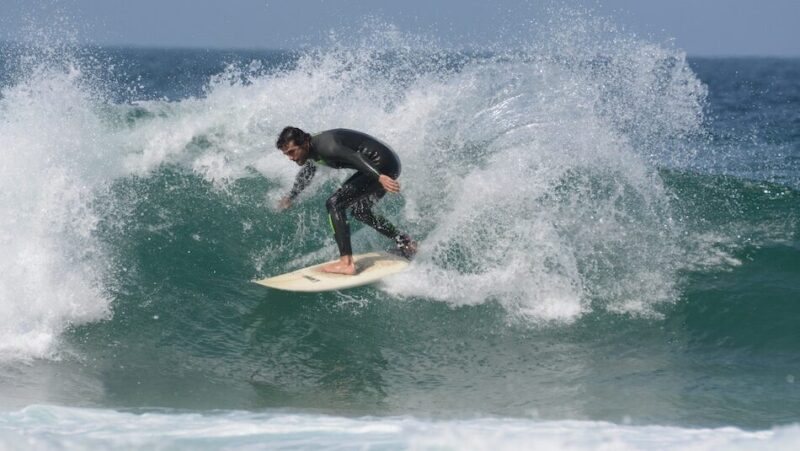
Surf Spots Within 5km or 3 Miles From Sagres
| Sagres Surf Spots | Distance from Town Center | Wave Size | Wave Quality | Skill Level |
|---|---|---|---|---|
|
Praia da Mareta |
Approx. 0.5km (0.3mi) |
1-5 foot |
Sheltered Beach Break |
Beginner to intermediate |
|
Praia de Tonel |
Approx. 0.5km (0.3mi) |
1-6 foot |
Punchy Beach Break |
Beginner to intermediate |
|
Praia do Martinhal |
Approx. 2km (1.2mi) |
1-3 foot |
Soft, Sheltered Beach Break |
Beginner |
|
Praia do Beliche |
Approx. 3km (1.9mi) |
2-8 foot |
Sheltered, Powerful Beach Break |
All experience levels |
|
Praia do Telheiro |
Approx. 5km (3.1mi) |
3-12 foot |
Powerful Hollow Beach Break |
Intermediate to advanced |
|
Note: Wave size varies considerably with swell direction, tide and seasonal conditions. Distances and travel times are measured from central Sagres, so your actual journey will depend on where you stay. |
||||
Sagres Surf Spot Guide
- Mareta
- Tonel
- Martinhal
- Beliche
- Telheiro
Ideal Conditions:
- Tide: Low to mid tide
- Wind: North to northeast
- Swell Direction: South & southeast
- Crowd Factor: Moderate
Mareta is the sheltered option in the heart of Sagres. Its south-facing bay blocks much of the Atlantic energy, creating smaller and softer waves when exposed beaches are getting too powerful.
Small to medium south swells can produce mellow peaks across the sandy beach. That makes Mareta particularly useful for beginners and longboarders. Larger swells can still make the wave punchy, but conditions become less forgiving.
It’s also incredibly convenient. The beach is only minutes from central Sagres, making it one of the easiest spots to reach without a car.
Rating: 4/5
Ideal Conditions:
- Tide: Low to mid tide
- Wind: Northeast
- Swell Direction: West to northwest
- Crowd Factor: Moderate-High
Tonel is the classic surf beach in Sagres. It faces the Atlantic and picks up considerably more swell than Mareta. The result is faster, more powerful surf with both left and right peaks.
The sandy bottom can shift throughout the year, so wave quality depends heavily on the banks. Smaller swells can be fun for improving surfers. Bigger days bring more power, stronger currents and heavier sections.
It’s close to town, too. That convenience makes Tonel popular. Expect more surfers when the forecast is good.
Rating: 4.5/5
Ideal Conditions:
- Tide: Mid to high tide
- Wind: North to northeast
- Swell Direction: South & southeast
- Crowd Factor: Low
Martinhal is the mellowest option of the five. The bay is sheltered and generally produces smaller, softer waves than the exposed beaches around Sagres.
It needs the right swell to become worthwhile for surfing. When conditions line up, the sandy beach can offer gentle waves that are suitable for beginners and less confident surfers.
Do not expect powerful Atlantic walls here. Martinhal is about keeping things easy. It can be a useful alternative when you want smaller surf and calmer conditions.
Rating: 3.5/5
Ideal Conditions:
- Tide: Low to mid tide
- Wind: East to northeast
- Swell Direction: West to northwest
- Crowd Factor: Moderate
Beliche sits beneath dramatic cliffs between Sagres and Cabo de São Vicente. The cliffs provide some shelter, but the beach can still handle serious swell.
On smaller days, the sheltered bay can produce manageable peaks for beginners and intermediates. As the swell increases, the wave becomes faster and more powerful. Hollow sections can appear close to shore.
The beach also has a steep staircase down from the road. It’s part of the experience, but worth considering before carrying a board down.
Rating: 4/5
Ideal Conditions:
- Tide: Mid tide
- Wind: East to southeast
- Swell Direction: West to northwest
- Crowd Factor: Low
Telheiro is the wild card around Sagres. It is exposed to the Atlantic and sits farther from town, with a rugged setting that feels much more remote.
When the swell arrives, the beach can produce powerful, hollow waves with plenty of energy. It is not the place to casually paddle out and hope for the best.
The combination of exposure, wave power and access makes Telheiro better suited to confident intermediate and advanced surfers. Check the forecast carefully. Conditions can change fast.
Rating: 4/5
How To Reach Sagres Surf Spots Without A Car
| Sagres Surf Spots | Walking Time | Biking Time | Public Transport |
|---|---|---|---|
|
Praia da Mareta |
5 min. |
2 min. |
Not required |
|
Praia de Tonel |
5 min. |
2 min. |
Not required |
|
Praia do Martinhal |
30 min. |
5-10 min. |
10 min (Taxi) |
|
Praia do Beliche |
45 min. |
10 min. |
5 min (Taxi) |
|
Praia do Telheiro |
Not advised |
25 min. |
15 min (Taxi) |
|
Note: Distances and travel times are measured from central Sagres, so your actual journey will depend on where you stay. |
|||
Surfing Sagres Without A Car
You can surf Sagres without renting a car, especially if you stay near the town centre. Mareta and Tonel are easy walks, while Martinhal and Beliche are manageable by bike or short taxi.
Maretta Surf Shop and Algarve Surf School are options for bike hire.
Telheiro is more remote, with rougher access. Surf schools can also help you reach the best beach for the day’s conditions.
Sagres Accommodation
Sagres has hostels, surf houses, apartments, guesthouses and higher-end hotels. Staying centrally makes the biggest difference if you want to travel without a car.
You can use Booking.com to compare hotels, apartments and hostels in Sagres.
If you are comparing your stay with other Algarve surf towns, you can also look at Arrifana, Lagos and Carrapateira, as well as Ericeira and Peniche.
| Accommodation Type | Description | Price Range (EUR)* | Price Range (USD)* |
|---|---|---|---|
|
Hostels |
Dormitory-style accommodation |
€25 to €50 |
$30 to $60 |
|
Mid-range Hotels/Serviced Apartments |
Studio apartments, motels, or 1-bedroom units |
€85 to €180 |
$100 to $210 |
|
Luxury Stays |
Luxury beachfront resorts or high-end apartments |
€210 to €520+ |
$250 to $600+ |
|
*Rates are per night and subject to change. |
|||
Sagres Surf Trip Budget Guide
Your daily Sagres surf trip budget depends heavily on accommodation, food and how often you hire equipment or use taxis. Below is your Sagres surf guide costs:
Budget Surf Trip
$70–$100 USD per day
Includes:
– Hostel or basic room
– Local food and cafes
– Walking to Mareta or Tonel
– Basic board hire
– Short bike trips
– Free beach and town activities
Comfortable Surf Trip
$130–$190 USD per day
Includes:
– Mid-range hotel or apartment
– Restaurant meals
– Daily board hire
– Bike hire and short taxis
– Coffee, drinks and snacks
– Extra surf or local activities
Premium Surf Trip
$250+ USD per day
Includes:
– Boutique hotel or luxury stay
– Quality restaurants
– Premium board hire
– Private transfers
– Surf lessons or coaching
– Tours and paid experiences
Sagres Surf Lessons & Surf Schools
Sagres has several surf schools catering to beginners, intermediates and more experienced surfers.
The advantage is flexibility. Schools can choose the beach according to the wind, swell and your ability rather than forcing every lesson onto the same beach.
Maretta Surf Shop, Algarve Surf School and International Surf School are three options to check for surf lessons, equipment and local guidance.
Is Sagres Good For Beginners?
Yes, Sages is very good for beginners, that’s if you choose the right beach and conditions.
Praia da Mareta is the most sheltered option close to town, while smaller days at Beliche can also suit newer surfers.
Tonel can work for beginners when the waves are small, but it becomes more powerful as the swell increases. Martinhal offers softer conditions when it’s working.
Your best option is to use a local surf school and let the conditions determine the beach.
Sagres Surf Camps
Sagres Natura Surf Camp’s Surf and Stay package combines accommodation with surf lessons for beginner and intermediate surfers. Lessons use step-by-step teaching, individual analysis and local knowledge to help you progress.
The camp is about five minutes from the town centre. Facilities include a tropical garden, BBQ area, kitchen, Wi-Fi, board storage and outdoor shower. Accommodation includes shared, twin, double and single rooms, with private bathrooms available.
The relaxed house setup also gives you plenty of communal space after surfing. There is a dining area, TV lounge, billiard table, ping pong, outdoor chill-out space and a fully equipped kitchen. Find Out More


Sagres Sun Stay combines surf accommodation with a resort-style setup. You have an outdoor saltwater pool, restaurant and bar, common kitchen, gym, coworking space and outdoor areas.
Accommodation includes twin rooms and several dorm options. Dorm beds have curtains and lockers, while private rooms include features such as ensuite bathrooms and pool views.
Bicycle and board rental are also available, making it useful for travellers who want surfing combined with more facilities during their stay. Find Out More


Sagres Surfboard Hire & Rentals
Hiring a board in Sagres is straightforward, with several surf shops and schools offering boards, wetsuits and other equipment.
It’s useful if you’re flying into Portugal and do not want to travel with a board bag.
Maretta Surf Shop, Algarve Surf School and International Surf School are three options to check for equipment hire. Availability and board selection can vary, especially during busier periods.
Portugal eSIM & Mobile Data Guide
An eSIM can make your Portugal surf trip much easier.
You can use mobile data for maps, weather forecasts, surf reports, transport information and booking taxis without relying on public Wi-Fi.
It also helps when you are moving between beaches. You can find out more about Portugal eSIM options with Airalo.
Sagres Surf Report & Surf Cam
Use Surf-Forecast to check swell direction, wave height, wind and tide before choosing your beach. Surfline is useful for combining forecasts with surf cams where available.
Checking both before you leave can help you avoid travelling to the wrong side of Sagres.
How To Get To Sagres
- Faro International Airport (FAO) To Sagres
Distance: 115km (71mi)
The closest major airport is Faro International Airport (FAO).
Faro Airport is approximately 115km (71mi) from Sagres. Driving takes around 1 hour 15 minutes. Public transport generally takes around 4 hours, depending on connections. A private or shared shuttle can take around 2 to 3 hours.
Faro is the easiest international gateway for Sagres. You can continue by taxi or rideshare, public transport or a pre-booked shuttle.
- Taxi/Rideshare
- Public Transport
- Shuttle Service
Taxi or Rideshare
Approx. 1.5 – 2 hrs.
Details:
A taxi, Uber or Bolt gives you the simplest door-to-door journey. This option makes particular sense if you have surfboards or arrive late.
You avoid changing buses and can go directly from the airport to your accommodation.
Public Transport
Approx. 2 – 3 hrs.
Details:
Public transport requires connections. You can travel from Faro towards Lagos and then continue towards Sagres.
Allow extra time for connections and check the timetable for your travel date, particularly outside the main summer season.
Shuttle Service
Approx. 2 – 3 hrs.
Details:
A pre-booked shuttle is a convenient middle ground between public transport and a private taxi.
You can arrange your transfer in advance and travel directly towards Sagres without navigating several public transport connections.
- Book Your Faro Airport To Sagres Private Transfer
A private airport transfer can save you the hassle of changing buses with luggage or surf equipment.
Kiwitaxi lets you arrange a pre-booked transfer from Faro Airport to your accommodation in Sagres, giving you a straightforward door-to-door journey.

Travel Insurance For Your Portugal Surf Trip
Surfing adds extra considerations to a Portugal surf trip.
Check the policy wording carefully before buying. Surfing may have specific conditions, exclusions or equipment limits.
We recommend checking Visitors Coverage for available travel insurance options and confirming that your planned surfing activities are covered.
What To Do In Sagres On Flat Surf Days
Sagres has plenty to keep you busy when the waves disappear. Visit Fortaleza de Sagres, explore the cliffs around Cabo de São Vicente, walk sections of the coastal trails or spend time around the harbour.
You can also use Viator to find and book local experiences and tours. A flat surf day does not have to mean a wasted day.
Portugal Travel Information | 7 Essentials You Need To Know
Portugal uses the euro, and most travellers can use cards throughout Sagres, although carrying some cash is useful for smaller purchases.
Visa requirements depend on your nationality, so check the current requirements before travelling.
Portuguese is the official language, although English is commonly understood in tourist areas. For more information, check our Portugal Surf Guide.
Pros & Cons Of Surfing Sagres
Sagres gives you plenty of surf variety in a compact town. That is its biggest advantage.
The trade-off is that conditions can change quickly, and some of the best beaches are less convenient without transport. Check out the pros and cons of this Sagres surf guide.
- Pros
- Multiple surf beaches close to town
- Mareta is beginner-friendly on smaller days
- Tonel catches reliable Atlantic swell
- Warmest water arrives in early autumn
- Compact town centre
- Possible to surf without renting a car
- Cons
- Winter water is cold
- Summer can be windy
- Some beaches need transport
- Telheiro has difficult access
- Winter surf can become powerful
Final Thoughts On This Sagres Surf Guide
Sagres gives you options. That is the real attraction.
You can walk to Mareta or Tonel from town, cycle towards Beliche and Martinhal, or arrange transport to more remote breaks such as Telheiro.
Beginners have sheltered options, while experienced surfers can chase much heavier Atlantic waves.
It’s a compact surf base with plenty of variety.
Sagre Surf Guide FAQs
Is Sagres Good For Surfing?
Yes. Sagres has surfable beaches throughout the year, with different breaks working depending on swell, wind and tide. Mareta offers shelter, Tonel catches more swell, Beliche provides another protected option, and Telheiro offers more powerful conditions for experienced surfers.
What Is The Best Month To Surf Sagres?
September and October are particularly strong months for an all-round surf trip. You can expect warmer water than winter, improving Atlantic swell and fewer summer crowds. November brings more powerful conditions as winter approaches.
Is Sagres Good For Beginner Surfers?
Yes, particularly during smaller summer conditions. Praia da Mareta is the easiest beginner option close to town. Beliche can also work for beginners when the waves are manageable. Tonel should be approached according to the day’s swell and your ability.
Can You Surf Sagres Without A Car?
Yes. Mareta and Tonel are both walkable from central Sagres. Martinhal and Beliche can be reached by bike or taxi, while Telheiro is better approached by bike or taxi because of its more remote access. Surf schools can also provide transport to the beach selected for the day’s conditions.
Keep Exploring With More Portugal Surf Destinations
Arrifana
Carrapateira
Ericeira
Lagos
Peniche

Written by Matt
Surfer for nearly 20 years and an environmental scientist for nine, Matt grew up on the Sunshine Coast in Australia and now calls Melbourne home. He’s all about finding surf towns you can reach without a car and writes simple surf guides to help you do the same.