
This post includes affiliate links. If you choose to purchase through them, I may receive a small commission at no extra cost to you.
Popoyo Surf Guide Overview
-
 By
Matt
By
Matt
- Updated | September 25, 2026

Popoyo is a remote surf village on the Pacific coast of Nicaragua. It’s small, laid back and built around the waves. If you’re planning a trip, this Popoyo surf guide covers the basics you need to know.
The coastline offers plenty of variety. You will find powerful reef breaks, mellow beach breaks and warm tropical water.
The Main Reef is the headline wave in Popoyo. It’s powerful and best suited to experienced surfers. Conditions can get serious when a bigger swell arrives.
There are easier options nearby.
Beginner Bay offers more forgiving waves for newer surfers. Playa Santana is another good option for beginners and intermediate surfers, depending on the conditions.
The surf changes throughout the year. May to October brings bigger south and southwest swells.
November to April is generally drier. Swells are often smaller and more manageable. It can be a better time for surfers looking for easier conditions and a more relaxed trip.
Quick Facts About Popoyo
Country
Nicaragua
Location
Southwest Pacific Coast
Best Surf Season
May to August
Water Temperature
26–29°C (79–84°F)
Best For
All Experience Levels
Closest Major Airport
Augusto C. Sandino International Airport (MGA)

In This Guide

Compare Prices, Book Today
How Many Days For A Popoyo Surf Trip?
Quick Popoyo Surf Trip
2 to 3 Days
Enough for a quick taste of Popoyo, especially if you focus on the Main Reef, Beginner Bay and Playa Guasacate.
Recommended
4 to 6 Days
Gives you much more flexibility. You can follow the swell, explore different breaks and allow for changing conditions.
Slow Travel
7+ Days
Ideal if surfing is the main reason for your trip. You have more chances to find the right combination of swell, wind, tide and crowd levels.
Best Time To Surf Popoyo
| Jan | Feb | Mar | Apr | May | Jun | Jul | Aug | Sep | Oct | Nov | Dec |
|---|---|---|---|---|---|---|---|---|---|---|---|
|
|
|
|
|
|
|
|
|
|
|
|
|
-
Peak Popoyo Surf Season | May to October
Suited For Intermediate & Advanced
May to October is Popoyo’s main surf season. Southern hemisphere swells become more frequent, bringing bigger and more powerful waves to the coastline.
The Main Reef can turn heavy and hollow, while larger swells also reach the outer reefs.
Rainfall is higher during this period. However, the trade-off can be excellent surf. This season is best suited to intermediate and advanced surfers looking for more size, power and consistency.
-
Shoulder Popoyo Surf Season | April & November
Suited For All Skill Levels
April and November sit between Popoyo’s main surf seasons. Conditions can vary as the swell and weather patterns transition. You can still find quality waves, but the size and consistency are less predictable than during the peak months.
These months can suit intermediate surfers who want a mix of conditions. Crowds can also be more manageable than during the heart of the main surf season.
-
Low Popoyo Surf Season | December to March
Suited For Beginners & Intermediate
December to March brings smaller and more manageable waves.
The weather is much drier, while offshore winds can help keep the surf clean. January and February can see particularly strong offshore winds.
This period is a better fit for beginners and surfers who prefer easier conditions. Beginner Bay and the more forgiving beach breaks can still offer worthwhile waves, even when the Main Reef is less powerful.
Popoyo Water Temperature, Surf Gear & Weather Guide
-
SUMMER
| Jun - Aug | -
AUTUMN
| Sep - Nov | -
WINTER
| Dec - Feb | -
SPRING
| Mar - May |
Popoyo Water Temperature:
26–27°C (79–81°F)
What To Wear:
Hot conditions mean simple surf gear is ideal. Boardshorts, a swimsuit and rash vest are usually enough for the water. Bring lightweight clothing for between sessions.
Rainfall:
This is the wetter part of the year. Expect humid days, tropical downpours and regular showers. Rain can be heavy, but it often arrives in bursts rather than lasting all day. 14 to 16 rainy days per month on average.
Popoyo Water Temperature:
26°C (79°F)
What To Wear:
Keep things light with boardshorts or a swimsuit and rash vest. The warm water means there is little need for extra neoprene.
Rainfall:
September and October bring the wettest conditions of the year, with frequent showers and high humidity. November is the turning point, as rainfall starts to fall and the weather gradually becomes drier. 10 to 22 rainy days per month on average.
Popoyo Water Temperature:
26°C (79°F)
What To Wear:
Lightweight surf gear is all you need. Boardshorts, a swimsuit and rash vest work well. A thin top can be handy during breezier sessions.
Rainfall:
Winter is one of the driest times to visit Popoyo. Rain is limited, the days are generally bright and conditions are warm. February is especially dry. 1 to 5 rainy days per month on average.
Popoyo Water Temperature:
27–28°C (81–82°F)
What To Wear:
Stick with boardshorts or a swimsuit and a rash vest. As temperatures rise, most surfers will not need anything more than lightweight gear.
Rainfall:
March and April are still relatively dry, but the wet season starts to make an appearance in May. Showers become more frequent as the month progresses. 0 to 10 rainy days per month on average.
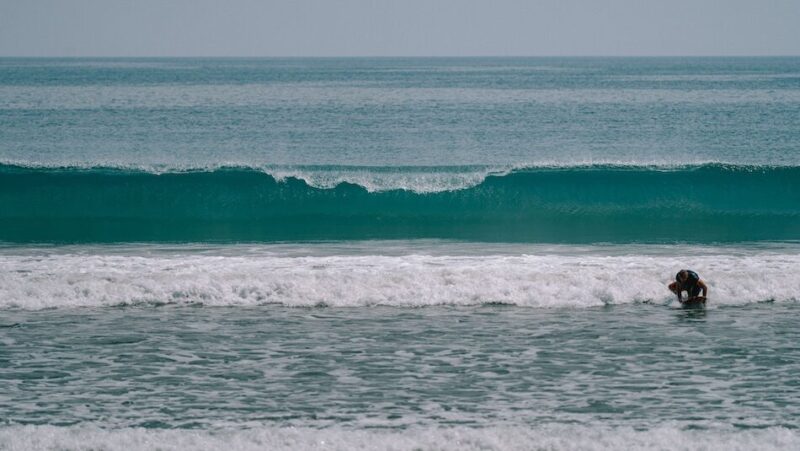
Surf Spots Within 5km or 3 Miles From Popoyo
| Popoyo Surf Spots | Distance from Town Center | Wave Size | Wave Quality | Skill Level |
|---|---|---|---|---|
|
Playa Guasacate |
1km (0.6mi) south |
2-5ft |
Fun beach break with multiple peaks |
All experience levels |
|
Beginner Bay |
2.5km (1.6mi) south |
1-4ft |
Sheltered, mellow beach break |
Beginner |
|
Playa Popoyo Main Reef |
3km (1.9mi) south |
2-8+ft |
Powerful A-frame reef break |
Intermediate to advanced |
|
Playa Santana |
3.5km (2.2mi) south |
2-7ft |
Multiple beach-break peaks |
All experience levels |
|
Note: Wave size varies considerably with swell direction, tide and seasonal conditions. Distances and travel times are measured from central Popoyo, so your actual journey will depend on where you stay. |
||||
Popoyo Surf Spot Guide
- Playa Guasacate
- Beginner Bay
- Playa Popoyo Main Reef
- Playa Santana
Ideal Conditions:
- Tide: Mid to high tide
- Wind: Northeast
- Swell Direction: South & southwest
- Crowd Factor: Low
Guasacate is a long stretch of beach with several peaks to choose from. It’s generally softer than the Main Reef, particularly when the swell is smaller.
The wave can produce clean, workable peaks around mid to high tide. Different sections of the beach can have slightly different shapes, so it’s worth watching the conditions before paddling out.
Guasacate is a good choice for improving surfers who want to explore the Popoyo area without jumping straight onto the heavier reefs.
Rating: 3.5/5
Ideal Conditions:
- Tide: Mid to high tide
- Wind: Northeast
- Swell Direction: South to southwest
- Crowd Factor: Moderate
Beginner Bay offers some of the more approachable waves around Popoyo. Its position helps take some of the energy out of larger swells, so the waves are generally smaller and slower than those at the exposed reefs.
It’s a place to build confidence, practice your take-offs and work on basic turns.
On a smaller swell, conditions can be especially friendly. Even so, surfers should still pay attention to currents, changing banks and other people in the water.
Rating: 3.5/5
Ideal Conditions:
- Tide: Rising mid to high
- Wind: Northeast
- Swell Direction: South to southwest
- Crowd Factor: Moderate to high
The Main Reef is the standout wave in Popoyo and the main reason experienced surfers come here. It produces fast lefts and rights over the reef, with more hollow and powerful sections as the swell builds.
Smaller swells can make it more manageable, while a solid south or southwest swell can turn the wave into a serious test.
The take-off, speed and shifting sections demand confidence. It’s best suited to experienced surfers who are comfortable surfing over reef and handling stronger conditions.
Rating: 5/5
Ideal Conditions:
- Tide: Mid tide
- Wind: Northeast
- Swell Direction: South to southwest
- Crowd Factor: Low to moderate
Playa Santana is a long sandy beach with several peaks, giving surfers plenty of space to look for a quieter section. It offers a good alternative when the Main Reef is too heavy or crowded.
The waves can be friendly on smaller swells, making Santana great for beginners progressing into intermediate surf.
As the swell increases, the beach starts to produce more power and stronger peaks. Pick your spot carefully and look for the section that matches your ability.
Rating: 3.5/5
How To Reach Popoyo Surf Spots Without A Car
| Popoyo Surf Spots | Walking Time | Biking Time | Public Transport |
|---|---|---|---|
|
Playa Guasacate |
10 min at low tide |
Not required |
10 min taxi or 10 min boat ride |
|
Beginner Bay |
30 min at low tide |
Not advised |
10 min taxi or 10 min boat ride |
|
Playa Popoyo Main Reef |
40 min at low tide |
Not advised |
10 min taxi or 20 min boat ride |
|
Playa Santana |
45 min at low tide |
Not advised |
10 min taxi or 20 min boat ride |
|
Note: Low tide is important around Popoyo. Some beach connections become much easier when the tide drops. Your surf camp can also arrange boat transport or vehicle drop-offs when you want to reach a different break. Distances and travel times are measured from central Popoyo, so your actual journey will depend on where you stay. |
|||
Surfing Popoyo Without A Car
You can surf Popoyo without renting a car. You just need to plan ahead. The tides matter, and so does where you want to surf.
Playa Guasacate and Beginner Bay can be reached on foot from the main Popoyo area. Walking is easier around low tide, when more of the coastline is accessible. The distances are manageable if you stay close to the surf zone.
Want to explore further? Boats are one of the easiest options. Surf camps and local accommodation can often arrange boat trips, taxis and transfers to different breaks. Many camps also organise transport around their daily surf schedule.
A car can be useful, but it is not essential. Popoyo is remote, so getting around takes a little more organisation than in a compact surf town. Stay near the main breaks and use local transport when needed. For a dedicated surf trip, that can be enough.
Popoyo Accommodation
Popoyo has a strong surf accommodation scene, from simple hostels and guesthouses to beachfront hotels and surf-focused stays. Booking.com is useful for comparing independent accommodation and finding somewhere close to the waves.
Compared with San Juan del Sur, Popoyo is quieter and much more surf-focused. El Gigante has a small fishing-village feel, while Miramar is even more low-key, with fewer distractions and a stronger focus on surfing.
| Accommodation Type | Description | Price Range (EUR)* | Price Range (USD)* |
|---|---|---|---|
|
Hostels |
Dormitory-style accommodation |
€10 to €35 |
$12 to $40 |
|
Mid-range Hotels/Serviced Apartments |
Studio apartments, motels, or 1-bedroom units |
€55 to €120 |
$60 to $135 |
|
Luxury Stays |
Luxury beachfront resorts or high-end apartments |
€120 to €300+ |
$135 to $330+ |
|
*Rates are per night and subject to change. |
|||
Popoyo Surf Trip Budget Guide
Popoyo can be relatively affordable once you arrive. Your biggest variables are accommodation, surf lessons, transport and whether your meals are included in a surf camp.
Budget Surf Trip
$35–$50 USD per day
Includes:
– Hostel dorm or basic room
– Local meals & restaurants
– Walking between surf spots
– Occasional board rental
– Limited paid activities
Comfortable Surf Trip
$70–$120 USD per day
Includes:
– Private room
– Three meals & drinks
– Regular board rental
– Occasional taxi or boat
– One or two paid activities
Premium Surf Trip
$150+ USD per day
Includes:
– Boutique hotel
– Restaurants
– Private surf lessons or guiding
– Boat trips to multiple breaks
– Private airport transfers
Popoyo Surf Lessons & Surf Schools
Popoyo is better known for surf camps than traditional surf schools.
You can still book individual lessons, beginner packages and board rentals, particularly around Beginner Bay. Local surf shops can also arrange coaching, guiding and transport, making it easier to find the best wave for the day’s conditions.
For a more organised surf holiday, with accommodation, meals and coaching bundled together, see the Popoyo Surf Camps section.
Is Popoyo Good For Beginners?
Popoyo can be for beginners, but the break you choose is important.
Beginner Bay is the easiest place to start, with smaller and slower waves than the exposed reefs. Playa Guasacate can also offer manageable beach-break conditions when the swell is smaller.
Playa Santana gives progressing surfers more options and space to find a suitable peak. The Popoyo Main Reef is different. It can be powerful and hollow, so it is better left to confident intermediates and advanced surfers.
Popoyo Surf Camps
Hotel Punta Teonoste Beach Front Resort
This five-day beginner surf camp combines surfing with a few extras. You get three guided surf lessons, beachfront accommodation, daily meals, a massage and a thermal-springs excursion.
Surf sessions take place at Punta Teonoste and El Gavilan. Accommodation is in independent bungalows with private bathrooms, outdoor showers, terraces and hammocks. Relaxed. Tropical. Easy. Find Out More


This eight-day Surf and Chill package is aimed at beginners and intermediate surfers. The package includes six semi-private coaching sessions, video analysis, surf theory, equipment and seven nights of accommodation.
You also get three vegetarian meals each day, plus water, coffee and tea. There is an ice bath and Spanish lesson included during the week too. Find Out More


Popoyo Surfboard Hire & Rentals
Renting a board around Popoyo is fairly straightforward. Options are available near popular surf areas, including Beginner Bay and the Main Reef.
Your best choice will depend on your ability and the day’s surf. A longer, wider board can make smaller waves much easier, while more experienced surfers may want something suited to stronger conditions.
Popoyo has more of a surf-camp scene than a huge standalone rental industry. Booking a camp? Check the equipment policy first. You may already have everything included.
Nicaragua eSIM & Mobile Data Guide
An eSIM can make getting around Nicaragua much simpler.
Use mobile data for maps, messages, restaurant searches, airport transfers and checking surf conditions. It’s very useful in remote areas like Popoyo, where Wi-Fi can be less reliable.
Airalo offers Nicaragua eSIM options that you can arrange before leaving home.
Popoyo Surf Report & Surf Cam
Check the forecast before every surf. Surf-Forecast is useful for swell height, swell direction, wind and tides. Surfline can also help with current conditions and surf cams where available.
Conditions can change quickly. Check the forecast before choosing between the Main Reef, Beginner Bay and Playa Santana. A few minutes of research can make a big difference to your session.
How To Get To Popoyo
- Augusto Cesar Sandino International Airport (MGA) To Popoyo
Distance: 110km (68mi)
The closest major international airport is Augusto C. Sandino International Airport (MGA) in Managua. The journey usually takes around 2 to 2.5 hours by road. Traffic and road conditions can make a difference. Travelling with surfboards?
A private transfer is the easiest option. Shared shuttles are another possibility, while public transport is much more involved.
- Taxi/Rideshare
- Public Transport
- Shuttle Service
Taxi or Rideshare
Approx. 2-2.5 hrs.
Details:
A private taxi or pre-booked transfer is the simplest way to get from MGA to Popoyo. Welcome Pickups lets you arrange a private transfer before you arrive.
You can also ask your surf camp about airport pickup. Many can organise this in advance.
Public Transport
Approx. 4+ hrs.
Details:
Public transport is possible, but it takes time. You will generally need several connections, usually travelling towards Rivas before continuing towards Tola and Popoyo.
It’s the budget option. It’s not the easy option. Surfboard bags make the journey even more difficult, especially if you arrive late.
Shuttle Service
Approx. 2.5-3.5 hrs.
Details:
Shared shuttles sit somewhere between private transfers and local buses. They are faster and more comfortable than public transport, while usually costing less than a private vehicle.
Schedules can vary, so check availability before booking. Some surf camps can also coordinate shared transfers for guests arriving around the same time.
- Book Your Augusto Cesar Sandino Airport To Popoyo Private Transfer
Welcome Pickups allows you to book your airport transfer before you leave home. Enter your arrival details, choose Popoyo and select a vehicle that fits your luggage.
Travelling with a surfboard? Check the vehicle size first. A board bag needs space.
Travel Insurance For Your Nicaragua Surf Trip
Travel insurance is worth considering for a surf trip. You may be dealing with flights, accommodation, transfers, equipment and surf activities all in one journey.
Look for a policy that includes medical expenses, travel disruption and cover for activities relevant to surfing. Check the conditions carefully before buying. Visitors Coverage is one option to compare before your trip.
What To Do In Popoyo On Flat Surf Days
Flat surf does not mean sitting around all day. There’s still plenty to do.
Explore the Guasacate tidal pools. Visit natural hot springs near Las Salinas. Go horseback riding or take a boat trip along the coast. You can also explore nearby fishing villages or head further afield for a day trip.
Chacocente Natural Reserve is another option, particularly during olive ridley turtle season. Viator can help you find and book available experiences.
Nicaragua Travel Information | 7 Essentials You Need To Know
Nicaragua uses the Nicaraguan Córdoba, although US dollars are widely used by travellers.
Entry requirements depend on your nationality, so check the latest visa and tourist-card rules before you fly. Wi-Fi is available at many hotels and cafés, but mobile data gives you more freedom when travelling around.
For more practical information, see our Nicaragua Surf Guide, covering wider travel essentials, safety, health and other useful details.
Pros & Cons Of Surfing Popoyo
Popoyo packs plenty of surf into a relatively small area. You get warm water, powerful waves, reliable offshore winds and a strong surf community.
The trade-off is its remote location. Infrastructure is limited, transport takes more planning and some breaks are easier to reach with local help.
- Pros
- Powerful & highly consistent Main Reef
- Warm water throughout the year
- Reliable offshore winds
- Beginner Bay offers easier waves
- Strong surf camp community
- Several breaks within a small area
- Cons
- Main Reef is unsuitable for beginners
- Heavy rain during the green season
- Public transport is inconvenient
- Limited nightlife
Final Thoughts On This Popoyo Surf Guide
Popoyo is a serious surf destination, but you need to choose your break carefully.
Beginner Bay is the obvious starting point for newer surfers, while Playa Guasacate and Playa Santana can offer more manageable conditions when the swell is smaller.
Then there’s the Main Reef. Fast. Powerful. Often hollow. It is built for experienced surfers.
Add warm water, offshore winds and a strong surf-camp scene, and Popoyo becomes the kind of destination where surfing can easily take over the entire trip. That’s the appeal.
Popoyo Surf Guide FAQs
Is Popoyo crowded?
Popoyo is generally quieter than Nicaragua’s better-known surf towns. The Main Reef can get busy when the conditions are good, but the nearby beach breaks often give you more space.
How many days do you need in Popoyo?
Five to seven days gives you enough time to surf different breaks and wait for better conditions. A longer stay makes sense if you want to explore the coastline and take things at a slower pace.
Where should surfers stay in Popoyo?
Staying near the main surf areas makes things much easier. There are hostels, guesthouses, hotels and surf-focused accommodation around Popoyo and nearby beaches. Walking distance from the waves is a big bonus.
Is Popoyo good for intermediate surfers?
Yes. Intermediate surfers have plenty of options. You can start with the more forgiving beach breaks and move towards stronger waves as your confidence grows. The Main Reef offers a serious step up when conditions become bigger.
Keep Exploring With More Nicaragua Surf Destinations

Written by Matt
Surfer for nearly 20 years and an environmental scientist for nine, Matt grew up on the Sunshine Coast in Australia and now calls Melbourne home. He’s all about finding surf towns you can reach without a car and writes simple surf guides to help you do the same.